
Our Blogs
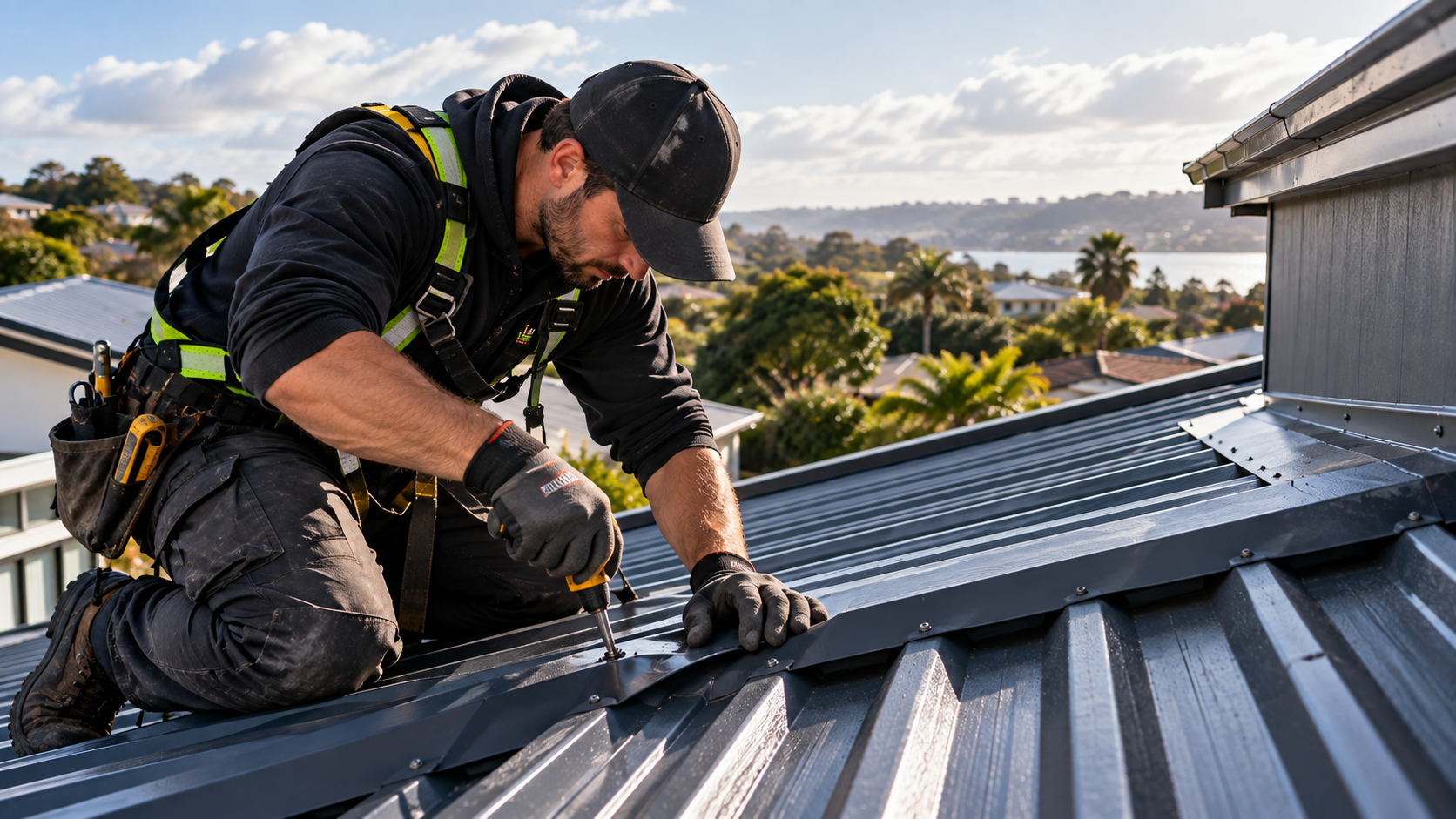
A small leak rarely stays small. In Auckland, where heavy rain, coastal wind and strong UV all work on your roof year-round, a loose flashing or a cracked tile can turn into soaked insulation, stained ceilings and rotting framing within a single wet season. Acting early is almost always the cheaper path.
This guide explains how roof repair in Auckland works in 2026. You will see what repairs typically cost, what happens from the first inspection to the final check, how long the work takes, and how to tell when a repair is enough and when it is time to think bigger. Whether you are dealing with a drip over the bedroom or planning ahead, you will know what to expect before you pick up the phone.
Most roof problems announce themselves before they become emergencies. Knowing what to look for helps you book roof repairs in Auckland while the job is still small.
Inside the house:
Outside the house:
Our guide to the warning signs that you need immediate roof repair in Auckland goes into each of these in more detail, including which ones should never wait.
Roof repair costs in Auckland depend on the type of damage, the roofing material, how hard the roof is to access and how much hidden damage sits underneath. The ranges below are indicative only. A written quote after an on-site inspection is the only way to get a firm number.
Roof pitch and height. Steep or two-storey roofs need more safety equipment and time, which raises labour costs.
Material. Metal, concrete tile, clay tile and membrane roofs each need different parts and skills. Older or discontinued profiles can be harder to match.
Hidden damage. A stained ceiling often means wet timber or insulation above it. If the leak has been running for a while, repair may include replacing damaged battens or underlay.
Access. Tight sections, limited ladder positions or neighbouring buildings can add time.
Urgency. After-hours call-outs and storm work are priced differently from planned repairs. If you are in the middle of an active leak, our guide to what to do first in an emergency roof repair situation in Auckland covers the immediate steps.
A quote that lists labour, materials and any allowances separately is a good sign. A single lump sum with no detail is worth questioning.
A professional repair follows a clear sequence. Knowing it helps you spot whether a contractor is doing the job properly.
The contractor inspects the roof surface, flashings, penetrations, valleys, gutters and the roof space underneath. Water often travels along rafters before it drips, so the visible stain is rarely directly under the entry point. A good inspector traces the leak back to its source rather than patching where the stain appears.
You should receive a written quote that states exactly what will be repaired, which materials will be used, the expected timeline and payment terms. If extra damage is found once work starts, the contractor should explain it and agree any additional cost with you first.
The team sets up safe access, protects gardens, windows and outdoor areas, and checks the weather forecast. Roofing work is weather dependent, so a reliable contractor will reschedule rather than rush a repair in rain.
This is where the actual fix happens. Depending on the problem, it can include replacing cracked tiles, re-fixing or replacing metal sheets, renewing flashings, re-bedding and re-pointing ridge capping, sealing penetrations or clearing and repairing gutters. Where moisture has got in, damaged underlay or timber is dealt with before the new material goes on top.
Once the repair is done, the team checks the area for watertightness, clears debris and walks you through what was fixed. Ask for photos of the work, particularly of any areas that will be hidden afterwards. Good records help with insurance claims and with future maintenance.
Most repairs are faster than people expect.
Weather is the biggest variable. Auckland’s wet spells can push planned work back, so build in some flexibility. Our article on how often to schedule roof repairs in Auckland’s climate explains how seasonal timing affects both cost and availability.
If water is already coming in, a few simple steps can limit the damage until the repair is done.
Many Auckland homeowners are surprised to learn how often leaks are caused by a handful of recurring faults. Our guide to common roofing problems in Auckland homes and how to fix them covers the usual suspects.
Repair makes sense when the damage is localised and the rest of the roof is sound. Replacement becomes the better investment when problems keep returning or the roof is near the end of its life.
Repair is usually enough when:
Replacement is worth considering when:
For a deeper comparison, read our breakdown of roof repair vs roof replacement for Auckland homeowners. If replacement does turn out to be the right call, our 2026 Auckland roof replacement cost guide will help you budget for it. If the existing roof structure is still sound, re-roofing can sometimes be a cost-effective middle path.
Different roofing materials fail in different ways, so repairs vary too.
Metal roofs. Typical issues include loose or corroded fixings, lifted sheets, damaged sealant at laps and rust at cut edges. Corrugated and long-run profiles are common across Auckland, and most faults are repairable without replacing whole sheets if caught early.
Concrete and clay tile roofs. Cracked or slipped tiles, deteriorated bedding and pointing on ridges and degraded valley flashings are the usual problems. Tile repairs are very manageable when handled promptly.
Membrane and flat roofs. Ponding water, split seams and failed penetrations are the main concerns. These roofs need regular checks because small defects spread quickly.
Gutters and flashings. Although not strictly the roof surface, blocked or sagging gutters and open flashings are among the most common causes of leaks across all roof types.
Whatever your roof type, the weather has a large influence on how fast problems develop. Our article on how Auckland’s weather affects roof damage and repairs explains why wind-driven rain and UV exposure are particularly hard on local roofs.
A repair is only as good as the person doing it. Before you commit, check these points.
Avoid anyone who quotes without inspecting the roof, asks for most of the payment upfront or cannot explain what caused the leak.
Metal Staff Roofing has more than 25 years of experience working on homes and businesses across Auckland. Our team handles everything from small leak repairs to larger restoration work, with a focus on finding the root cause rather than applying a quick patch.
When you book with us, you get:
We work on both residential roofing and commercial roofing projects, so whether it is a family home or a warehouse roof, we have the right team for the job.
Ready to get your roof fixed? Learn more about our roof repair services in Auckland, then request a free quote or call us on +64 2108995040.
How much does roof repair cost in Auckland?
Small repairs such as resealing a flashing or replacing a few tiles typically range from NZ$300 to NZ$1,200. Larger repairs involving valleys, ridges or sections of metal sheeting can run from about NZ$1,500 to NZ$6,000. The final price depends on your roof type, access and the extent of hidden damage.
How long does a roof repair take?
Minor repairs often take a few hours, mid-sized jobs take half a day to a full day, and larger repairs can take several days. Wet weather can delay the work, as roofing is not done safely in the rain.
Can a leaking roof be repaired without replacing the whole roof?
Yes, in most cases. If the leak comes from a specific failure such as a flashing, a cracked tile, a loose fixing or a damaged valley, a targeted repair is usually enough. Replacement is only needed when the roof is widely deteriorated or beyond its lifespan.
Is roof repair covered by insurance in New Zealand?
It depends on the cause. Sudden damage from storms or falling objects may be covered, while wear and tear and lack of maintenance usually are not. Check your policy and document the damage with photos before any work begins.
Do I need a building consent for roof repairs in Auckland?
Minor repairs and like-for-like replacements generally do not need consent. Changes to materials, structure or heritage and character properties may. Your contractor should advise you before starting.
How do I know if my roof needs repair or replacement?
Isolated damage on an otherwise sound roof points to repair. Frequent leaks, widespread corrosion, a roof at the end of its lifespan or moisture damage through the structure point to replacement. A professional inspection gives you a clear answer.
What should I do if my roof is leaking right now?
Contain the water with buckets, move belongings out of the way, photograph the damage and call a roofer as soon as possible. Do not climb onto a wet roof yourself.
How often should I have my roof inspected?
Most roofers recommend an inspection every one to two years and after any major storm. Regular checks catch small faults early, which keeps repair costs low. You can read more in our guide on how often you should inspect your roof in New Zealand.