Metal Roofing Contractors Auckland: Why Metal Is the Best Choice for NZ Homes
- Home
- Metal Roofing Contractors Auckland: Why Metal Is the Best Choice for NZ Homes

Our Blogs
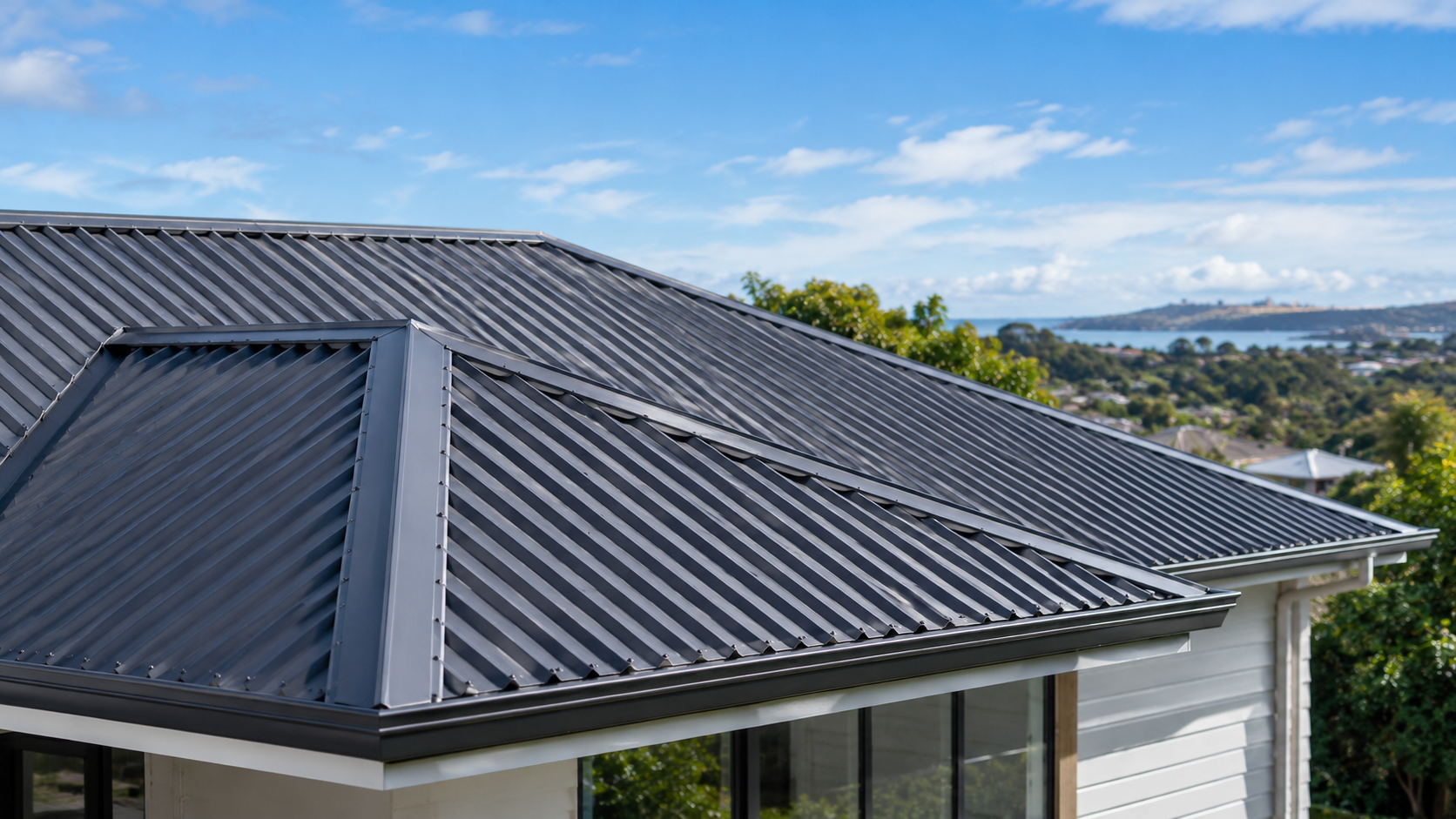
Walk through almost any Auckland suburb and you will see it: metal roofs on new builds, renovated villas and everything in between. That is not a design trend. Metal roofing has been a New Zealand standard for generations because it handles the things our weather throws at roofs, namely heavy rain, wind, strong UV and salty coastal air.
If you are planning a new roof, a re-roof or a full replacement, this guide explains why metal is so widely chosen, how it compares with tile and asphalt, what it costs in 2026 and what to look for in a metal roofing contractor in Auckland.
Auckland is humid, windy and wet for much of the year, and most of the city sits close to the coast. That combination is hard on roofing. Metal copes with it well for a few reasons.
It sheds water fast. Metal profiles move rainwater to the gutters quickly, which reduces the moisture sitting on the roof surface. That matters in a city where wet spells can last for days.
It handles wind. Metal sheets are fixed along their length and are far lighter than tiles, so the roof structure carries less load while still holding firmly in strong gusts when installed correctly.
It resists UV. Quality coatings protect the steel from the sun’s UV, which breaks down many other roofing materials over time.
It does not absorb water. Unlike some materials, metal does not soak up moisture, so you avoid the cycle of absorbing, freezing or drying and cracking that shortens other roofs’ lives.
Our article on how Auckland’s weather affects roof damage and repairs explains in more detail why local conditions are so hard on roofing, and why material choice matters so much here.
Choosing a roofing material comes down to cost, lifespan, weight, maintenance and how well it handles local conditions. Here is how the three most discussed options compare for Auckland homes.
| Factor | Metal | Concrete or clay tile | Asphalt shingle |
|---|---|---|---|
| Typical lifespan | 40 to 70 years | 40 to 60 years | 15 to 30 years |
| Weight on structure | Light | Heavy | Light to medium |
| Wind performance | Strong when properly fixed | Tiles can lift or crack | Can lift in strong wind |
| Maintenance | Low | Moderate, with pointing and moss care | Moderate |
| Coastal performance | Good with correct coating | Good, but fixings and pointing need checks | Variable |
| Installation speed | Fast | Slower | Moderate |
| Upfront cost | Mid to high | High | Lower |
| Recyclable | Yes | Limited | Limited |
Metal’s biggest advantages are its weight, speed of installation and low maintenance. Because it is lighter than tile, it often places less demand on the roof framing. Sheets also go on faster than individual tiles, which can reduce labour time and weather exposure during the job.
Tiles suit some traditional or heritage styles and offer excellent longevity when well maintained. The trade-offs are weight, higher installation costs and the need to keep an eye on cracked tiles and ridge pointing over the years.
Asphalt shingles are less common across New Zealand than in other countries, and their shorter lifespan makes them a harder sell here. In a market where metal and tile are both widely available, many homeowners find asphalt does not offer the same long-term value.
Not all metal roofs are the same. The right choice depends on your home’s style, budget and exposure to coastal conditions.
Corrugated profiles. The classic look found on many Kiwi villas and bungalows. It is economical, durable and works well for both new builds and character renovations.
Trapezoidal and ribbed profiles. A cleaner, more modern appearance with strong water-shedding performance. These are popular on contemporary homes.
Long-run roofing. Continuous sheets that run from ridge to eave, reducing joins and therefore potential leak points.
Standing seam and concealed fix systems. Premium profiles with hidden fixings and a sleek finish, often chosen for architectural homes.
Metal tile profiles. Steel pressed to look like tile while keeping the weight and installation benefits of metal. A good option if you want the look of tile without the load.
Coatings and colours matter as much as the profile. Pre-painted steel, zinc-aluminium coated steel and aluminium options all have different strengths, particularly near the coast. A good contractor will recommend a product based on your suburb’s exposure, not just what is cheapest.
Costs vary with roof size, pitch, complexity and the profile and coating you choose. The figures below are indicative ranges only.
| Project type | Indicative cost (NZ$) |
|---|---|
| Metal roof repair (sections, flashings, fixings) | 500 to 2,500 |
| Metal re-roof over an existing structure (standard home) | 12,000 to 30,000 |
| Full metal roof replacement (standard home) | 18,000 to 45,000 |
| New metal roof for a new build | Varies by design and size |
| Premium standing seam systems | Higher end of the above ranges |
Roof size and complexity. More valleys, hips, skylights and penetrations mean more flashing work and labour.
Roof pitch and access. Steeper roofs and tight sites raise safety and handling costs.
Material choice. Profile, thickness and coating all affect price.
Removal and disposal. Stripping an old roof, including any asbestos testing where relevant, adds to the budget.
Underlay and insulation. Replacing building paper, underlay or insulation at the same time is often smart, but it changes the quote.
For a deeper breakdown of budgeting, see our 2026 Auckland roof replacement cost guide and our guide to what it costs to re-roof a house in Auckland.
A metal roof usually costs more upfront than the cheapest alternatives, but the value shows up over the years.
Longer life means fewer replacements. A well-installed metal roof can last four to seven decades, so you may never need to replace it again in your time in the home.
Lower maintenance. There is no re-pointing, no cracked tiles to replace and far less moss build-up to deal with, though regular checks are still important.
Better resale appeal. A new or well-kept metal roof is a clear selling point for buyers who want to avoid roofing costs. Our article on why investing in a new roof adds value to your Auckland home covers this in more detail.
Energy performance. Reflective coatings and proper insulation under a metal roof can help keep homes more comfortable through summer.
Sustainability. Steel and aluminium are recyclable at the end of their life, which suits homeowners who care about environmental impact.
Metal is durable, but it is not maintenance-free. Most issues come from poor installation or neglect rather than the material itself.
Loose or corroded fixings. Wind and thermal movement can loosen screws over time. Regular checks catch this early.
Rust at cut edges and overlaps. Often caused by unprotected edges, trapped debris or incompatible materials. Quick treatment prevents it spreading.
Sealant failure. Sealants at laps and penetrations age and crack. Replacing them is a small job if done on time.
Noise concerns. Rain on metal can be loud without proper insulation and underlay. Good installation largely solves this.
Incorrect flashing. Poorly installed flashings around chimneys, skylights and vents are the most common source of leaks.
If you already have a metal roof showing any of these signs, our guide to common roofing problems in Auckland homes and how to fix them will help you identify what is going on, and our roof repair service covers fixes for sheets, flashings and fixings.
The quality of installation matters as much as the material. A great product installed badly will still leak. When comparing metal roofing contractors in Auckland, check the following.
Specific metal roofing experience. Ask how many metal roofs they install each year and whether they can show similar completed projects. Metal needs different skills from tile, particularly around flashings, expansion and fixing patterns.
Licensing and insurance. Confirm they work with Licensed Building Practitioners and carry public liability insurance.
Product knowledge. A good contractor explains why a particular profile and coating suit your property, rather than recommending the same thing for every job.
Written quote and scope. The quote should list materials, underlay, flashings, removal, disposal and timelines clearly.
Manufacturer warranty and workmanship guarantee. Ask what each covers. Material warranties and installation guarantees are different things.
Local reviews and references. Check recent Google reviews and ask for examples from your area.
Clear communication. You should know who is on your roof, how long it will take and how weather delays are handled.
Knowing the steps helps you judge whether a contractor is doing things properly.
A standard Auckland home re-roof in metal commonly takes between three and seven working days, depending on size, complexity and weather.
Metal suits a wide range of properties. On homes, it works across new builds, villas, townhouses and renovations. For businesses, its light weight, long spans and durability make it a strong choice for warehouses, factories, retail buildings and offices.
If you own a home, our residential roofing team can help you match a profile and finish to your house. If you manage a business property, our commercial roofing specialists handle larger and more complex projects, and our guide on choosing a commercial roofing contractor in Auckland explains what to look for.
How you install metal depends on the state of your existing roof.
New roof. For new builds and extensions, our new roofs service installs metal from scratch with the right underlay, flashings and fixings for your design.
Re-roofing. If your structure is sound but the surface material is worn, re-roofing in Auckland can restore the roof without a full strip-back.
Full replacement. If the old roof is failing or the structure is compromised, a roof replacement is the safest route. Our comparison of roof repair vs roof replacement for Auckland homeowners can help you decide.
A little attention goes a long way.
Metal Staff Roofing has more than 25 years of experience installing and maintaining metal roofs across Auckland. We specialise in metal roofing for homes and commercial properties, and our licensed roofing specialists look after everything from new installations to repairs.
What you get when you work with us:
Ready to talk about your roof? Request a free quote or call us on +64 2108995040.
How long does a metal roof last in Auckland?
A well-installed and maintained metal roof typically lasts 40 to 70 years, depending on the profile, coating and exposure. Coastal properties benefit from higher-grade coatings and regular washing.
Is metal roofing more expensive than tile?
Metal is usually comparable to or lower in total installed cost than tile, particularly once installation time and structural requirements are considered. Premium systems like standing seam sit at the higher end.
Is a metal roof noisy in the rain?
Not if it is installed properly. Quality underlay, insulation and fixing methods reduce rain noise to a level most homeowners find comfortable.
Do metal roofs rust in coastal areas?
Metal roofs can corrode if the wrong product is used near the sea or if edges are left unprotected. Choosing a coating suited to your exposure and rinsing off salt deposits regularly prevents most problems.
Can you install metal roofing over an existing roof?
In some cases, yes, when the structure is sound and the existing material is suitable. A contractor needs to inspect the roof first to confirm it is safe and compliant.
Do I need building consent to install a metal roof in Auckland?
Like-for-like replacements often do not need consent, but changing materials, altering the structure or working on a heritage property can. Your contractor should confirm before work begins.
How long does metal roof installation take?
Most standard residential projects take three to seven working days. Larger or more complex roofs take longer, and wet weather can cause delays.
Does a metal roof increase home value?
A new or well-maintained metal roof removes a major cost concern for buyers and can support a stronger sale. It also improves curb appeal when the colour and profile suit the home.
Is metal roofing good for solar panels?
Yes. Metal roofs are a popular base for solar installations because they are durable, long-lasting and allow secure mounting systems.