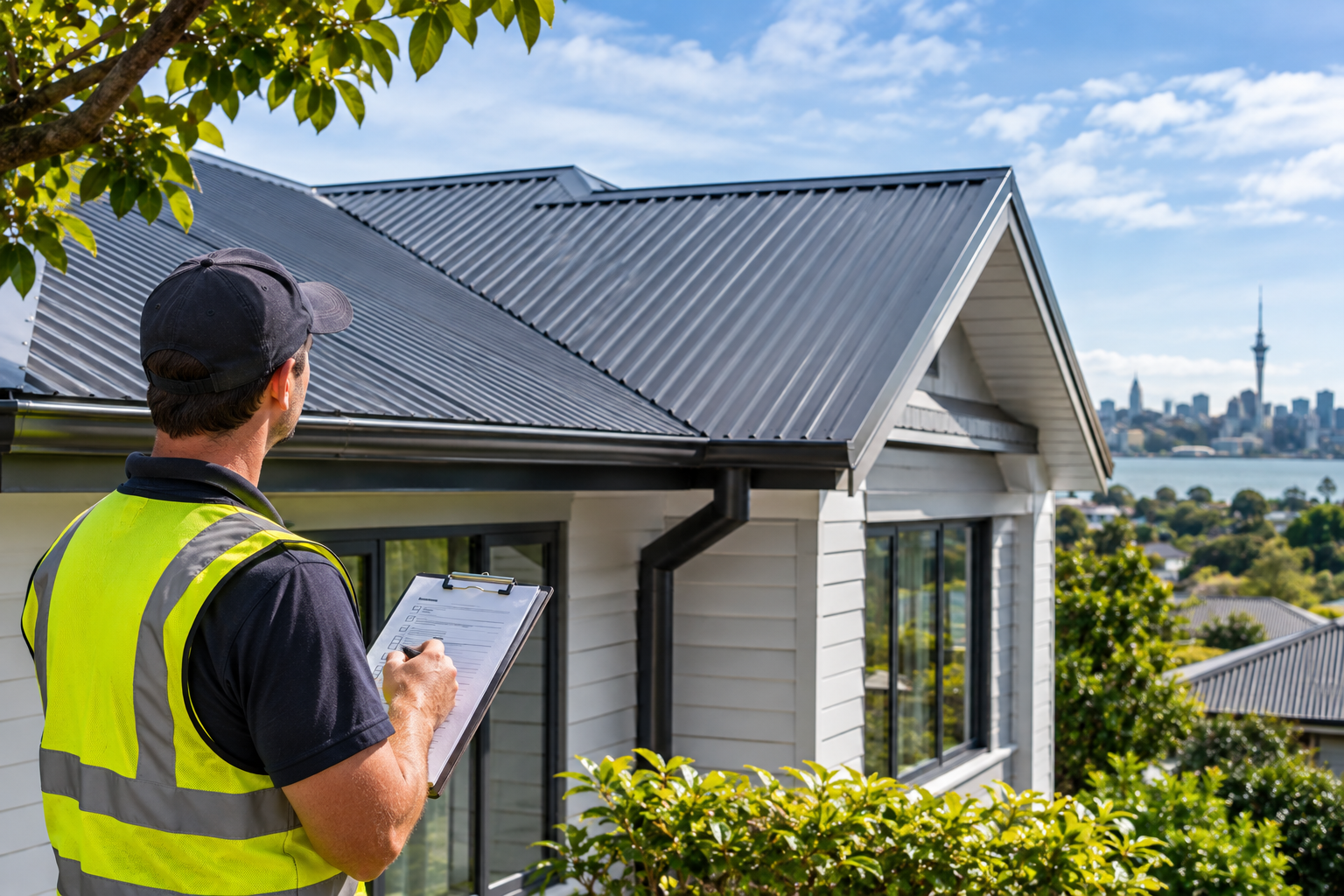
Roofing Services Auckland: What to Expect From a Professional Roofing Company
- Home
- Roofing Services Auckland: What to Expect From a Professional Roofing Company

Our Blogs
Most people only call a roofer when something has already gone wrong. A ceiling stain appears, a storm lifts a sheet or an inspector flags the roof during a property sale. At that point you need answers quickly, but you may not know what services exist, what a professional job looks like or what the process involves from the first phone call to the final handover.
This guide explains what roofing services Auckland homeowners and businesses can expect from a professional company. It covers the full range of services, what licensed roofers do differently, what happens at each stage of a project and how to choose a contractor you can trust. Whether you need a small repair or a completely new roof, you will know what to ask and what to look for.
A professional roofing company does far more than lay new material. The work spans the whole life of a roof, from installation to inspection, repair and replacement. Here are the main services you will come across in roofing Auckland projects.
For new builds, extensions and major renovations, a new roof is designed and installed from the ground up, with the right underlay, flashings, fixings and drainage for the structure. Our new roofs service works from your building plans and covers everything from material selection to final inspection.
When an existing roof is damaged, leaking or showing its age, replacement removes the old roofing, checks and repairs the structure underneath and installs a completely new system. Our roof replacement service is built for roofs that are beyond a patch-up.
Re-roofing restores a roof without a full rebuild when the structure underneath is still sound. It can reduce demolition, waste and time compared with a complete replacement. You can read more about how re-roofing in Auckland works and when it makes sense.
Repairs target specific problems such as leaks, damaged flashings, cracked tiles, lifted sheets, loose fixings and storm damage. Maintenance covers the regular checks, cleaning and small fixes that keep a roof healthy. If you are dealing with a specific fault, our roof repair service covers it.
Homes have their own needs, from heritage villas to modern builds, and a good company adapts its approach to the house. Our residential roofing team looks after everything from small repairs to full installations on family homes across Auckland.
Warehouses, offices, retail buildings and industrial sites have larger roofs, different materials and tighter requirements around downtime, drainage and compliance. Our commercial roofing specialists handle these projects across Auckland.
A roof inspection checks the surface, flashings, gutters and roof space, and ends with a clear report on what needs attention. Many roofing companies also offer maintenance schedules so problems are caught before they become leaks. Our guide on how often you should inspect your roof in New Zealand explains how to time them.
Storm damage, sudden leaks and fallen branches cannot wait for a convenient appointment. Emergency services focus on stopping water getting in, with temporary coverings where needed, and then arranging a proper repair. If you are dealing with an active leak, see our guide on what to do first in an emergency roof repair situation in Auckland.
One of the most useful things a professional roofer does is tell you what you do not need. The right service depends on the condition of your roof, not on what is easiest to sell.
| Situation | Likely service |
|---|---|
| One leak or a few damaged areas, roof otherwise sound | Roof repair |
| Worn roofing surface, dry and healthy structure | Re-roofing |
| Widespread damage, repeated leaks, structural concerns | Roof replacement |
| New build or extension | New roof installation |
| Unsure about condition, buying or selling a property | Roof inspection |
| Active leak or storm damage | Emergency repair |
| Roof is fine but you want to keep it that way | Maintenance and inspections |
If you are weighing repair against a bigger job, our comparison of roof repair vs replacement for Auckland homeowners explains how to decide. If you are not sure whether your roof needs attention at all, our guide to the warning signs that you need immediate roof repair in Auckland lists what to look for.
Not everyone who climbs onto a roof is qualified to do so. The difference between a licensed professional and an unlicensed operator shows up in safety, quality, paperwork and what happens if something goes wrong.
They work within New Zealand’s building rules. Certain roofing work must be carried out or supervised by a Licensed Building Practitioner. A licensed roofer knows which jobs need consent, which do not and how to handle the paperwork.
They carry proper insurance. Public liability cover protects your property if something is damaged during the work. Ask for a copy of the certificate, and be wary of anyone who cannot provide it.
They take safety seriously. Working at height is high risk. Professional crews use edge protection, secure access and the right equipment, which protects them and you.
They diagnose before they quote. A professional finds the cause of the problem, including checking the roof space where relevant, instead of guessing from the ground or over the phone.
They give clear, written quotes. Scope, materials, timelines, exclusions and payment terms are laid out so you can compare quotes fairly.
They stand behind their work. A workmanship guarantee in writing, alongside the manufacturer’s material warranty, shows a contractor is willing to be held to their standard.
They use materials suited to the conditions. Auckland’s rain, wind, humidity and coastal exposure affect which products and coatings last, and a knowledgeable roofer chooses accordingly. Our article on roofing challenges in Auckland’s weather conditions explains why this matters so much locally.
They leave the site tidy. Debris, offcuts and fixings are cleaned up, gutters are checked and your property is left as they found it.
A professional job follows a clear pattern. Knowing it in advance helps you spot good practice and ask the right questions.
When you call or fill in a form, a reputable company asks about the problem, the type of building and the roof, and whether anything is urgent. They should explain how the process works and when someone can visit. For urgent leaks, they should tell you what to do in the meantime to limit the damage.
A proper inspection covers the roof surface, flashings, penetrations, gutters and, where possible, the roof space. You should expect photos, a plain-language explanation of what was found and an honest view on whether you need a repair, a re-roof or a replacement. Be cautious of anyone who quotes without looking.
The quote should state what is being done, what materials will be used, how long it will take, what is excluded and how extra damage will be handled if it is found once work begins. If something is unclear, ask. A good contractor is happy to explain.
You compare quotes, ask questions and choose. Once you accept, the contractor confirms the start date, orders materials and, where required, arranges consent and engineering. For consented work, this stage can take some weeks, so ask about lead times early.
Before work starts, the team sets up safe access, protects gardens, paths, windows and driveways and arranges material delivery. You will be told when they are arriving and what you need to move or clear.
The crew carries out the agreed work, whether that is a repair, a re-roof or a full installation. A professional team keeps you informed, protects the roof if the weather turns and tells you promptly if something unexpected comes up, along with how it affects the scope.
When the job is done, the roofer checks their own work, cleans up and walks you through what was completed. You should have a chance to ask questions and review any photos of areas that will not be visible afterwards.
You receive warranty documents, the workmanship guarantee, any required paperwork and advice on caring for the roof. A good roofer also tells you when to schedule your next inspection and what to watch for.
The process is similar, but the priorities differ.
Homeowners usually care about weather protection, appearance, comfort, long-term value and minimal disruption to daily life. Material choice, colour and finish matter, and so does the contractor’s communication.
Commercial property owners and managers focus on minimising downtime, managing drainage on large or flat roofs, safe access, compliance records and planned maintenance. Commercial work often needs careful scheduling around tenants and operations.
If you manage a commercial building, our guide on how to choose the right commercial roofing contractor in Auckland walks through what to look for, and our article on maintaining commercial roofs for long-term use covers upkeep between inspections.
When you compare roofing services Auckland providers, look beyond the price. These checks separate reliable contractors from risky ones.
Our article on why homeowners trust professional residential roofing contractors in Auckland explains what reliable contractors do differently.
Watch for these warning signs before you commit.
If you see several of these together, walk away and get another quote.
Roofing in Auckland is not the same as roofing in a dry inland region. Humidity, wind-driven rain, coastal salt and strong UV all accelerate wear, and they influence how roofs should be installed, maintained and repaired.
This affects the services you are likely to need. Regular inspections matter more, flashing and sealant detail matters more and material and coating choice matters more near the coast. It also means problems can develop out of sight, which is why a roof that looks fine from the ground can still have damp insulation or corroded fixings above the ceiling.
Our guide on how Auckland’s weather affects roof damage and repairs explains this in more detail, and our article on common roofing problems in Auckland homes and how to fix them shows what the typical faults look like.
Take these with you when you speak to any roofing company.
A confident, professional roofer will answer these clearly and without defensiveness.
Metal Staff Roofing has more than 25 years of experience providing roofing services across Auckland. Our licensed roofing specialists cover new roofs, replacements, re-roofing, repairs and maintenance for homes and commercial properties, and we give you honest, plain-language advice on what your roof actually needs. You can learn more about our background on our about us page.
What you can expect from us:
Not sure which service you need? Request a free quote or call us on +64 2108995040 and we will take a proper look.
What roofing services are available in Auckland?
Professional roofing companies typically offer new roof installation, roof replacement, re-roofing, repairs, maintenance, inspections and emergency services for both residential and commercial properties.
How do I know which roofing service I need?
Isolated damage on an otherwise sound roof usually points to repair. A worn surface with a healthy structure may suit re-roofing, while widespread damage or repeated leaks point towards replacement. A professional inspection gives you a clear answer.
What does a licensed roofer do that an unlicensed one cannot?
Certain roofing work in New Zealand must be carried out or supervised by a Licensed Building Practitioner. Licensed roofers also work within building rules, carry insurance and are accountable if work does not meet standards.
How do I check if a roofing company is licensed?
You can look up a Licensed Building Practitioner on the official LBP register by name or licence number. A reputable company will give you these details without hesitation.
What should be in a roofing quote?
A good quote lists the scope of work, materials, timeline, payment terms, exclusions, how extra damage will be handled and guarantee details. If any of these are missing, ask for them before you accept.
Will a roofer fix a leak the same day?
For urgent leaks, many companies can respond quickly with a temporary fix to stop water getting in, followed by a proper repair once the cause is identified and the weather allows. Ask about emergency availability when you call.
Do I need building consent for roofing work?
Like-for-like repairs often do not need consent, but new builds, extensions and changes to material, pitch or structure usually do, as can work on heritage or character properties. Your roofer should confirm this before work begins.
Can I stay in my home while roofing work is being done?
In most cases, yes. Expect noise and some disruption during working hours, and plan around pets, young children and anyone working from home.
How often should I use roofing maintenance services?
A professional inspection every one to two years is the usual recommendation, more often for older roofs and coastal properties, plus after any major storm.
What happens if something goes wrong after the job?
A reputable contractor offers a written workmanship guarantee, and the roofing material usually carries a manufacturer’s warranty. Keep your quote, invoice and guarantee documents safe in case you need to make a claim.