
Our Blogs
Most homeowners only think about their roof when water is already dripping through the ceiling. By then, the damage underneath has usually been building for months. A roof inspection in Auckland is the simplest way to find problems while they are still small, cheap and easy to fix.
This guide explains exactly what a professional roof check involves, what inspectors look for, how long it takes, what it costs in 2026 and how often your roof should be looked at. If you want the short version, the checklist and cost sections below are written to be scanned.
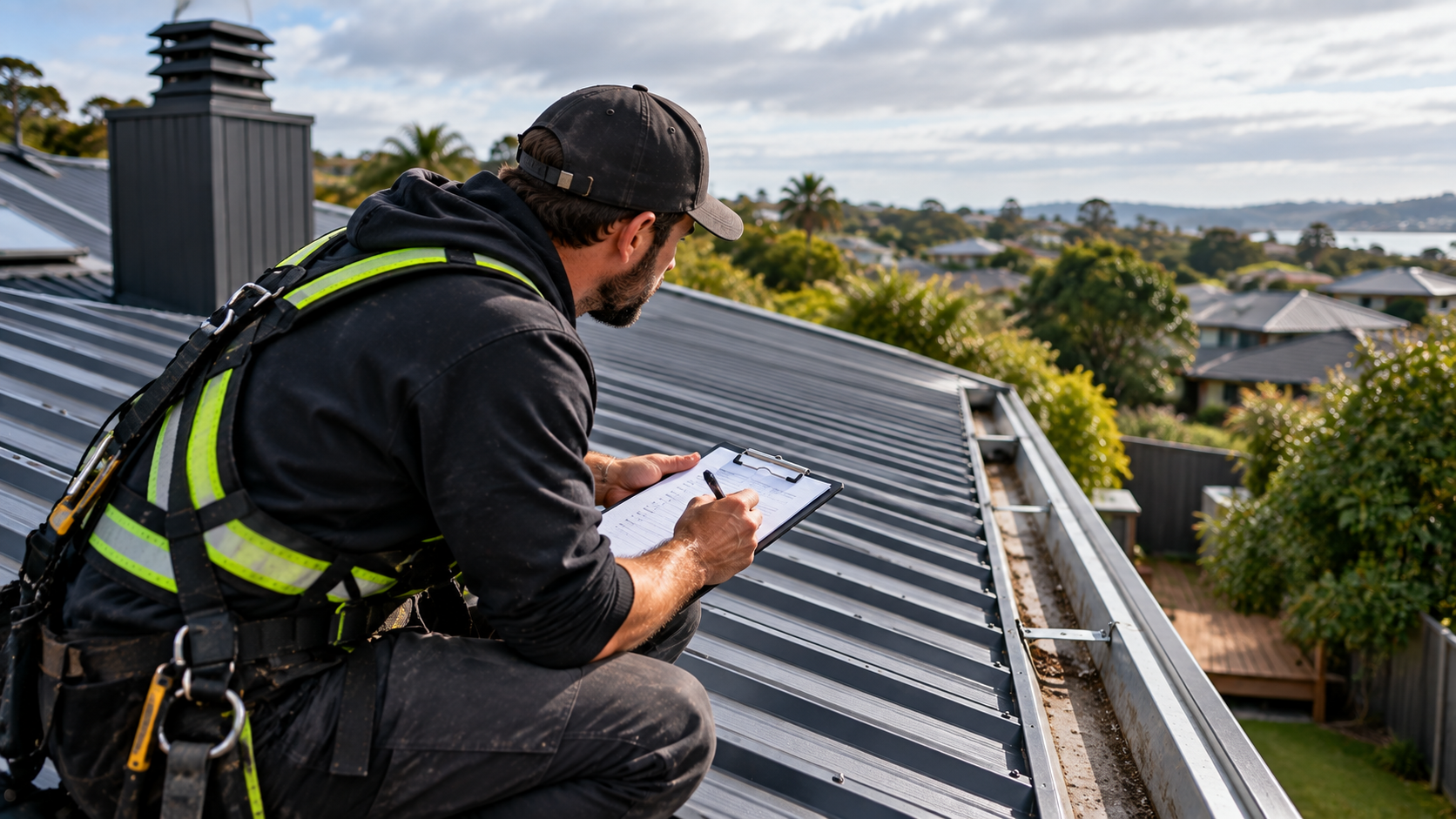
A roof inspection is a systematic check of your roof’s surface, edges, penetrations, drainage and the roof space underneath. The goal is to find existing damage, spot early signs of wear and tell you what needs repair, what needs monitoring and what is fine as it is.
A proper inspection is not a quick glance from the ground. It covers the exterior and the interior, and it ends with a written summary and photos so you can see exactly what was found.
Here is the checklist a thorough roofing inspection in NZ should cover.
A good inspector works through all five areas rather than only the roof surface, because many leaks start in places you cannot see from the ground.
Most inspections are quicker than people expect.
The time includes the roof space check and a walk-through of the findings. Written reports and photos usually follow within one to three working days. Weather matters too. Inspectors avoid walking on wet or windy roofs for safety reasons, so Auckland’s rainy spells can push bookings back by a day or two.
Roof size and pitch. Large or steep roofs take longer and need more safety equipment.
Level of reporting. A verbal summary costs less than a written report with photos and recommendations.
Access. Tight sections, high eaves or restricted ladder positions add time.
Purpose. Pre-purchase, insurance and compliance inspections usually need more documentation.
Some roofing companies in Auckland offer a free inspection when you are also requesting a quote for repairs or re-roofing, so ask before you pay for a standalone check.
The short answer: every one to two years, plus after any major storm.
Here is a practical schedule:
Auckland’s climate makes regular checks especially worthwhile. Humidity, salt air, wind-driven rain and strong UV all wear roofing materials faster than many people realise. Our guide on how often you should inspect your roof in New Zealand goes deeper into timing, and our article on roofing challenges in Auckland weather conditions explains why local conditions are so tough on roofs.
The real value of an inspection is what it finds before you do. Common early catches include:
Failing flashings. A lifted or cracked flashing is one of the most common leak sources and one of the cheapest fixes if caught early.
Loose fixings and lifting sheets. Wind works on these slowly. Re-fixing a few screws now can prevent a sheet peeling off in a storm.
Rust and corrosion. Spotting rust at edges and overlaps lets you treat or replace small areas before it spreads.
Hidden moisture. Damp insulation and darkened timber in the roof space show a leak that has not yet reached your ceiling.
Blocked gutters. Overflow can soak fascia boards and push water back under the roof edge.
Moss and algae. Growth holds water against the surface and shortens roof life, particularly on tiles.
Poor past repairs. Inspectors often find patchwork, wrong sealants or mismatched materials that are about to fail.
Our guide to common roofing problems in Auckland homes and how to fix them shows what these faults look like and what the usual fixes involve.
Do not wait for your next scheduled inspection if you notice any of these:
Our article on the warning signs you need immediate roof repair in Auckland lists the red flags that should never be put off.
A good inspection ends with clear, plain-language findings. You should receive:
From there, you have three typical outcomes.
Minor repairs needed. Small faults like flashings, fixings or sealant can often be handled quickly through professional roof repair.
Repair or replace decision. If damage is widespread or the roof is near the end of its life, you will need to weigh options. Our comparison of roof repair vs replacement for Auckland homeowners helps with that decision, and a sound structure may allow re-roofing as a middle path.
No action needed. If everything checks out, you get peace of mind and a clear date for your next inspection.
Commercial roofs have different risks. Large flat or low-pitch areas, rooftop plant, drainage systems and foot traffic all create more points of failure. For business owners, a missed leak can mean stock damage, tenant disputes and downtime.
Commercial inspections usually add checks for drainage capacity, membrane seams, roof access safety and compliance records. If you manage a building, our guide on why Auckland commercial roof inspections are necessary explains what to look for, and our advice on maintaining commercial roofs for long-term use covers upkeep between inspections.
You can do a basic ground-level check, but you should never climb onto your roof without proper safety gear and training. Falls from roofs are a leading cause of serious home injuries in New Zealand.
A safe DIY check looks like this:
This is a useful monitoring habit, but it does not replace a professional inspection. Roofers know where leaks hide, what early failure looks like and how to test areas you cannot reach safely.
Look for these points when choosing who inspects your roof:
Metal Staff Roofing has over 25 years of experience inspecting and maintaining roofs across Auckland. Our licensed roofing specialists check the surface, flashings, gutters and roof space, then give you honest findings with photos and a clear written quote if work is needed.
What you can expect from us:
Whether you own a family home or manage a commercial property, our team handles both residential roofing and commercial roofing projects across Auckland.
Ready to find out what shape your roof is really in? Request a free quote or call us on +64 2108995040.
How much does a roof inspection cost in Auckland?
A basic visual inspection typically costs NZ$150 to NZ$300, while a full inspection with a roof space check and photo report is usually NZ$250 to NZ$500. Detailed reports for insurance or property sales can reach NZ$800, and commercial roofs cost more depending on size.
How long does a roof inspection take?
Most residential inspections take 45 to 90 minutes. Larger or more complex roofs can take up to three hours, and commercial buildings may need half a day or more.
How often should I get my roof inspected in Auckland?
Every one to two years is the general recommendation, with annual checks for older roofs and coastal properties. You should also arrange an inspection after any major storm.
What does a roof inspector look for?
Inspectors check the roof surface, flashings, penetrations, gutters, fascia, roof space, insulation and fixings. They look for damage, wear, moisture, rust, poor past repairs and anything that could cause a leak.
Do I need a roof inspection before buying a house in New Zealand?
It is strongly recommended. A building report may only give a general view of the roof, while a specialist roofing inspection can reveal remaining lifespan, hidden moisture and likely repair costs before you commit.
Can a roof inspection be done in the rain?
Roof surfaces are not inspected safely in wet or windy conditions, but the roof space can often be checked from inside. Most contractors will reschedule the exterior part for a dry day.
Will a roof inspection find leaks I cannot see?
Often, yes. Inspectors check the roof space for damp insulation, stained timber and rusted fixings, which can reveal slow leaks long before stains reach your ceiling.
Is a roof inspection worth it if my roof looks fine?
Yes. Many roof problems are invisible from the ground, and finding them early usually costs far less than repairing the damage they cause later.