Residential Roofing Auckland: Complete Homeowner’s Guide
- Home
- Residential Roofing Auckland: Complete Homeowner’s Guide

Our Blogs
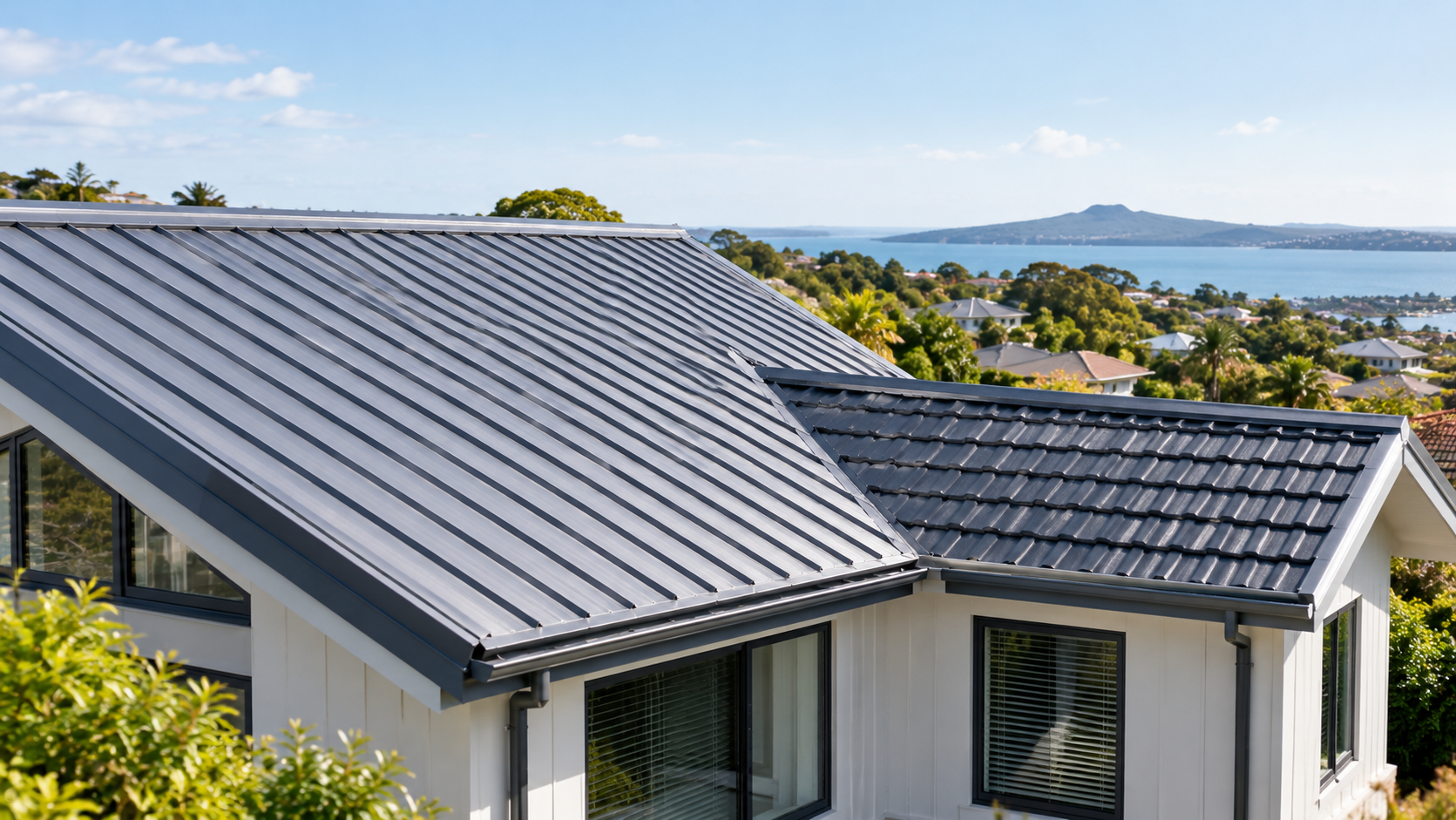
Your roof does more work than any other part of your home. It keeps out rain, handles wind, blocks UV and holds your insulation and ventilation system together, all while sitting in plain sight and getting very little attention. In Auckland, where humid air, coastal salt and sudden downpours are part of normal life, a roof that is well chosen and well maintained makes a real difference to how comfortable and protected your home is.
This guide covers everything an Auckland homeowner needs to know about residential roofing: how roofs work, which materials suit local conditions, when council rules apply, how to maintain your roof through the year, how to spot trouble early and how to choose the right contractor. Whether you are building, renovating, buying or just looking after what you have, this is the reference to keep handy.
A roof is a system, not just the visible surface. Knowing the layers helps you understand quotes, inspections and why small faults can cause big problems.
Roofing material. The outer layer, such as metal sheets or tiles, that sheds water and takes the weather.
Underlay or building paper. A secondary barrier under the roofing that catches any water or condensation that gets past the surface.
Battens and framing. The timber structure that supports the roofing and carries its load back to the walls.
Flashings. Shaped metal pieces that seal junctions, such as around chimneys, skylights, vents and where roofs meet walls. Flashings are the most common leak points on any roof.
Gutters, fascia and downpipes. The drainage system that carries water away from the building.
Insulation and ventilation. The ceiling and roof space systems that control temperature and moisture inside the house.
When one part fails, the others are forced to compensate. A cracked flashing leads to wet battens, wet battens lead to rot, and rot leads to a repair bill that is far bigger than the original fault.
Auckland sits between two harbours with a humid, changeable climate. That mix creates a specific set of challenges for any home roof.
These conditions are why material choice, installation quality and regular maintenance matter more here than in drier regions. Our article on roofing challenges in Auckland’s weather conditions goes into each of these in more depth, and our piece on how Auckland’s weather affects roof damage and repairs shows what the damage actually looks like.
There is no single best material for every house. The right choice depends on your home’s style, structure, budget, location and how much maintenance you want to take on.
Metal is the most common residential roofing choice across Auckland, and for good reason. It is light, sheds water quickly, installs efficiently and suits everything from villas to modern builds.
Metal’s light weight means it often places less load on the roof framing, and its low maintenance appeals to homeowners who want something dependable. The key is correct installation, particularly flashings and fixings.
Tiles suit certain architectural styles and have a long track record in New Zealand. They are durable but heavy, so the framing has to be able to carry the load, and they need periodic attention to ridge pointing, cracked tiles and moss.
Extensions, garages, decks and modern flat-roof designs use membrane systems. These need careful drainage design and regular checks, because small defects at seams and penetrations can spread quickly.
Ask these questions before you decide:
A good contractor will talk you through these questions rather than recommending the same product for every house.
Different roof situations call for different work. Here is how the main service types fit together.
Roof repair. Targeted fixes for leaks, damaged flashings, loose fixings, cracked tiles or storm damage. It suits roofs that are fundamentally sound. See our roof repair service for what this covers, and our guide to residential roof repair near you for the signs that a repair is urgent.
Re-roofing. Installing new roofing material over a structure that is still sound. It can reduce demolition and waste compared with a full strip-back. Read more about re-roofing in Auckland and why Auckland’s climate matters when choosing re-roofing.
Roof replacement. Removing the old roof entirely and starting fresh. This is the right path when damage is widespread, the structure is compromised or the roof is beyond its useful life. See our roof replacement service for details.
New roof installation. For new builds, extensions and major renovations, where the roof is designed and installed as part of the project. Our new roofs service works from your building plans.
If you are unsure which category you fall into, our comparison of roof repair vs replacement for Auckland homeowners explains how to decide.
Rules around roofing work in Auckland depend on what you are doing and what kind of property you have. The following is general guidance only, so always confirm with your contractor and Auckland Council before work starts.
Like-for-like replacements. Replacing roofing with the same type of material in the same configuration often does not need building consent, though this depends on the situation.
Changing the material or structure. Moving from tile to metal, altering the roof shape, changing the pitch or modifying the framing can trigger consent requirements, and may need engineering input.
Heritage and character areas. Properties in special character overlays or heritage zones can have extra rules on materials, colours and appearance. Check this before choosing a roof for an older home in suburbs such as Ponsonby, Devonport or Remuera.
Restricted building work. In New Zealand, certain roofing work must be carried out or supervised by a Licensed Building Practitioner. You can verify a contractor’s status on the official LBP register.
Asbestos on older homes. Roofs on homes built before the mid-1980s may contain asbestos, which requires proper testing and handling.
A good roofing contractor will tell you early whether consent applies, rather than leaving you to find out halfway through the project.
Regular maintenance is the cheapest way to extend a roof’s life. Here is a practical schedule that suits Auckland conditions.
For a deeper look at timing, our guide on how often you should inspect your roof in New Zealand and our article on how often to schedule roof repairs in Auckland’s climate explain how to plan inspections and repairs around the seasons.
Most roofs give warnings before they fail. Learning to spot them helps you act while problems are still small.
Inside your home:
Outside your home:
If you notice any of these, our guide to the warning signs you need immediate roof repair in Auckland explains which ones should never wait, and our article on common roofing problems in Auckland homes shows what typically causes them and how they are fixed.
Lifespan varies widely with the material, the quality of installation, the exposure of your property and how well the roof is maintained. As a general principle, well-installed metal and tile roofs can last for decades, while membrane roofs have shorter service lives. Coastal exposure, poor drainage, neglected maintenance and low-quality installation all shorten that timeline.
The better question is not how old the roof is, but what condition it is in. A fifteen-year-old roof with failing flashings and rusted fixings needs attention sooner than a twenty-five-year-old roof that has been inspected and looked after. Our guide on how quality residential roofing enhances your Auckland home’s lifespan explains how installation quality and upkeep affect long-term performance.
A roof replacement or re-roof is the ideal time to improve the systems around it. Once the roofing is off or accessible, upgrading insulation, ventilation and underlay is far easier and cheaper than doing it separately later.
Insulation. Good ceiling and roof insulation reduces heat loss in winter and heat gain in summer, which helps comfort and energy use.
Ventilation. Proper airflow in the roof space reduces condensation, which protects framing, insulation and ceilings from mould and rot.
Underlay. A quality underlay adds a second layer of protection and can help reduce rain noise on metal roofs.
Solar panels. If you plan to install solar, think about it before the roof goes on. Mounting points, roof orientation and roofing material all affect how well solar works, and it is better to plan the two projects together.
A sound, attractive roof is one of the first things buyers and building inspectors notice. It reduces the risk of unexpected costs, improves curb appeal and signals that a home has been looked after. Even if you are not selling, a roof in good condition protects the value of everything underneath it. Our article on why investing in a new roof adds value to your Auckland home covers this in more detail.
The best material in the world will still leak if it is installed badly. When comparing contractors, look for these signs of a trustworthy business.
Our article on why homeowners trust professional residential roofing contractors in Auckland explains what separates reliable contractors from the rest.
Metal Staff Roofing has more than 25 years of experience looking after Auckland homes. Our licensed roofing specialists handle everything from repairs and maintenance to re-roofing, replacement and new installations, and our residential roofing service is built around making sure your home is protected for the long term.
What you can expect from us:
Not sure what state your roof is in? Request a free quote or call us on +64 2108995040 and we will take a proper look.
What is the best roofing material for a home in Auckland?
Metal is the most widely used choice thanks to its light weight, water-shedding performance and low maintenance, while tile suits certain styles and structures. The best option depends on your home’s framing, location and style, so ask a roofing professional to assess your property.
Do I need building consent to replace my roof in Auckland?
Like-for-like replacements often do not require consent, but changing the material, altering the structure or working on a heritage or character property can. Your contractor should confirm this before work begins, and you can check with Auckland Council.
How often should a residential roof be inspected?
Every one to two years is the general recommendation, with annual checks for older roofs and coastal homes. You should also arrange an inspection after any severe storm.
How can I tell if my roof needs repair or replacement?
Isolated damage on an otherwise sound roof usually points to repair. Frequent leaks, widespread rust or cracking, sagging and moisture in the roof space point toward replacement. A professional inspection gives you a clear answer.
Can I stay in my home during roofing work?
In most cases, yes. Expect noise during working hours and plan around pets, young children or anyone working from home.
How do I maintain my roof between inspections?
Keep gutters and valleys clear, check for visible damage after storms, wash off salt and moss, trim overhanging branches and watch for ceiling stains or damp smells inside.
Does moss on my roof cause damage?
Yes, over time. Moss and algae hold moisture against the roof surface, which can speed up deterioration, especially on tiles and in shaded areas. Gentle cleaning and treatment help, but avoid aggressive pressure washing that can damage coatings or tiles.
Should I upgrade insulation when I replace my roof?
It is a good time to. With the roofing off or accessible, upgrading insulation, underlay and ventilation is much easier, and it can improve comfort and reduce condensation problems.
How do I choose a residential roofing contractor in Auckland?
Check licensing and insurance, ask for a detailed written quote, read recent reviews, confirm guarantees in writing and look for a contractor who gives honest advice rather than pushing the biggest job.